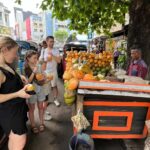
Hungry in Colombo? This tuk-tuk tour turns dinner into a guided street-food plan. I like that the route is built around classic Sri Lankan dishes you actually recognize, then hits Galle Face Green to round out the meal with a real evening stop. The private setup also means you can ask questions without the usual crowd chaos.
What I really like is the pacing: short stops for each bite, so you get variety without feeling stuffed. I also like that you start with the easy win, a King Coconut welcome drink, then move through savory hits like hoppers and kottu roti before finishing with sweets and Ceylon tea.
One thing to consider: this is a food-focused tour with items like fish curry and crab curry choices, plus chili flavor. If you have strong allergies or strict dietary needs, you’ll want to flag that upfront—there’s no extra customization mentioned.
In This Review
- Key highlights that make this tour worth your evening
- Why a tuk-tuk food safari works so well in Colombo
- Price and what you get for $40
- The opening sip: King Coconut welcome drink
- Stop 1 to 2: Hoppers with lunu miris at Taste of Asia
- Stop 3: Kottu roti at Pilawoos (Kollupitiya)
- Stop 4: Pittu with crab curry or babath curry at Yarl Hotel
- Stop 5: Curd with treacle or gulabjamun
- Stop 6: Pure Ceylon tea at Zylen Tea
- Stop 7: Isso Wade at Galle Face Green
- What the “all-inclusive” part really means for your night
- A few practical tips before you book
- Should you book the Colombo Local Food Tour by tuk-tuk?
- FAQ
- What’s included in the Colombo Local Food Tour by tuk-tuk?
- How long is the tour?
- Does the tour offer pickup?
- Is this tour private?
- Do I need a mobile ticket?
- Can I cancel for a full refund?
Key highlights that make this tour worth your evening
- Private tuk-tuk with an English-speaking driver, so you’re not stuck translating or herding your own group
- 7 taste stops that cover drink, street snacks, curries, and dessert—one smooth food route
- Specific local staples like hoppers with lunu miris, kottu roti, and pittu with crab or babath curry
- Tea stop at Zylen Tea with Pure Ceylon tea, not just another generic caffeine break
- A finishing stop at Galle Face Green for Isso Wade, mixing food with a classic Colombo night vibe
- Seen-good guide energy in past tours, including Ranil and Fazir, plus Mohamed in other runs
Why a tuk-tuk food safari works so well in Colombo
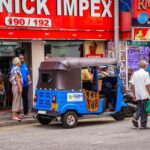
Colombo can feel like a lot all at once—traffic, neighborhoods, and menus that blur together if you don’t know what to order. A tuk-tuk food tour solves that with motion and guidance. You’re not asking strangers what’s safe or worth it. You’re following a plan that’s built for eating, not sightseeing first and food later.
The private format matters, too. If you want to slow down for photos, ask what something tastes like, or get a quick explainer on a spice, you can. In the reviews, guides like Ranil and Fazir (and also Mohamed on another run) come through as part teacher, part street-food translator. That combination is exactly what you want when the dishes are unfamiliar.
It also helps that this tour is positioned as an evening safari. Night gives you a different rhythm in the city. You’re eating when people are out and about, and the tuk-tuk hopping between stops keeps things lively without turning it into a long slog.
You can also read our reviews of more food & drink experiences in Colombo
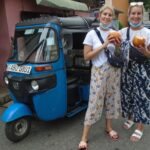
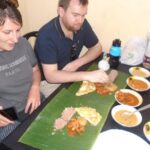
Price and what you get for $40
At $40 per person for about 3 hours, you’re paying for more than food. You’re paying for the whole delivery system: a private tuk-tuk, an English-speaking driver, the listed welcome drink and food tastings, and the tea and dessert components.
Here’s what is included:
- Private tuk-tuk with an English-speaking driver
- Water bottle
- Welcome drinks
- Food and beverages listed in the itinerary
- All taxes and parking charges
- Mobile ticket
What’s not included is equally important: extra food and beverages. That means you should enjoy the included tastings, then decide later if you want more on your own.
In plain terms, this price makes sense if you’d otherwise struggle to find these spots on your own, or if you’re the type who hates the guessing game of what to order. If you already know exactly where you’re going and what you want to eat, you could DIY for less. But the tradeoff is time, navigation, and the risk of picking places that aren’t as “local” as you hoped.
The opening sip: King Coconut welcome drink
Your tour starts with King Coconut, served as a welcome drink. This is a smart first move because it cools you down and gets you in the Sri Lankan mood fast. King coconut is sweet, lightly nutty, and it’s hydrating—helpful when you’re walking and riding in the evening.
The stop is about 15 minutes. Translation: you’ll have enough time to settle in, taste, and ask your guide what’s coming next. If you’re the type who worries about being stuck with something you don’t like, starting with coconut is a good hedge. It’s not a complicated flavor, but it tells you the tour isn’t treating food like a checklist—it’s building an order of experiences.
Stop 1 to 2: Hoppers with lunu miris at Taste of Asia
Next up are hoppers, served with lunu miris (spicy chili condiment). Hoppers are basically Sri Lanka’s breakfast-style crowd-pleaser—thin-edged, crispy on the outside, and softer in the center. You’ll usually see them as a handheld or plate item, and they’re ideal for a food tour because they show you texture as much as taste.
The “with lunu miris” part is where the tour earns its keep. That chili condiment gives you heat and tang, so you don’t just taste the hopper—you taste the pairing philosophy. Sri Lankan meals often rely on contrast: crisp plus spice, milder base plus sharp condiment.
This stop runs about 30 minutes. That time isn’t just for eating. It’s enough to watch how people actually eat this dish and get a feel for portion size without rushing you out.
A practical consideration: if you don’t do spicy, you may still want to ask the guide how hot the lunu miris tends to be. The itinerary doesn’t mention spice levels, so this is where you take control.
Stop 3: Kottu roti at Pilawoos (Kollupitiya)
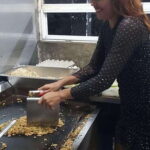
Then comes kottu roti, one of Sri Lanka’s most famous street foods. It’s made from shredded roti mixed with vegetables and your choice of meat or egg. The texture is the headline: it’s chopped, sizzling, and fragrant with spices as it cooks.
This is also a great stop for a food tour because kottu roti is interactive. Even if you don’t fully understand the language, you can understand the motion—food being cooked to order, steam rising, and that quick street-food rhythm. In the reviews, people mention not just eating in places they wouldn’t find on their own, and kottu roti is exactly the kind of street staple that rewards having a guide.
Time here is about 30 minutes. That works well because kottu roti can be filling. If you pace yourself at this stop, the rest of the itinerary won’t feel like a food sprint.
Possible drawback: since the itinerary doesn’t mention vegetarian alternatives here, if you avoid meat or eggs, you’ll need to ask whether the kottu roti option can be adjusted.
You can also read our reviews of more tours and experiences in Colombo

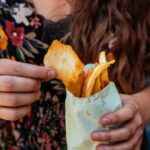

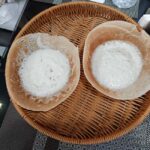

Stop 4: Pittu with crab curry or babath curry at Yarl Hotel
Now you get into something more specific: pittu, a steamed dish made from rice and coconut flour. It’s paired with either crab curry or babath curry.
This stop is the “taste something you can’t just find anywhere” moment. Pittu has a different mouthfeel than many rice dishes—more delicate and coconut-leaning. Then the curry pairing changes the whole experience. Crab curry brings seafood sweetness and depth. Babath curry (often described as tangy in the tour info) shifts it toward a sharper, sour-leaning bite.
This stop is about 30 minutes, so you’ll have time for both the curry and the base to register. If you’re curious about how Sri Lankan cuisine handles coconut across sweet and savory, this is a strong comparison point because coconut appears in multiple parts of the itinerary.
The main consideration is seafood and spice. Crab is not subtle. If you don’t like shellfish, choose babath curry if available. If you have allergy concerns, ask early—this is the kind of dish where you don’t want to guess.
Stop 5: Curd with treacle or gulabjamun
After the savory stretch, you get the sweet reset: curd topped with treacle, or gulabjamun (a deep-fried dough ball soaked in sugar syrup). This is the kind of stop that makes the tour feel complete, not just like a long string of salty bites.
Curd with treacle gives you cool creaminess against sticky sweetness. Gulabjamun is warmer and syrup-soaked, with a comforting dense texture. Either way, you get a sugar-and-coconut-friendly closure that fits an evening meal.
This stop is about 15 minutes—short enough that you don’t feel stuck with dessert for an hour. It’s also a good moment to slow down and take a breath. If you’ve been eating fast, this is where you can re-center and decide whether to keep going with a light tea or call it a day.
One note: sweet portions can hit hard after savory. If you’re sensitive to very sugary flavors, you might want to start by tasting rather than going straight for full bites.
Stop 6: Pure Ceylon tea at Zylen Tea
Next: Pure Ceylon Tea at Zylen Tea. Sri Lanka is famous for tea, and a tea stop like this is more than a drink break. It’s part of the food culture. Tea often shows up alongside dessert, snacks, and evening routines, and it gives you a flavor bridge between spicy, salty, and sweet.
The stop is about 30 minutes, which is generous compared to some food tours. It gives you time to taste the tea properly and ask questions about how it’s described. Even if you don’t become a tea expert by the end (no pressure), you’ll leave with a better sense of what people mean when they say Ceylon tea has a distinct character.
Value tip: if you’re the kind of visitor who tends to skip drinks on tours, don’t. A proper tea stop is a big part of why this itinerary feels like more than random bites.
Stop 7: Isso Wade at Galle Face Green
The final savory stop is Isso Wade, a traditional fish curry, served at Galle Face Green. This is a smart ending for two reasons: you finish with something tied to seafood and coastal flavor, and you also end in a place with an unmistakable Colombo evening feel.
This stop is about 30 minutes. That’s enough time to eat without rushing, then enjoy the surrounding atmosphere after. Galle Face Green is a classic name you’ll hear in Colombo, and pairing it with curry makes the location meaningful, not just scenic.
Practical drawback: this is fish curry. If you’re not into fish flavors, you’ll want to treat the tour as a mostly savory-and-sweet mixed experience rather than a guaranteed fish-lover win.
That said, if you do eat seafood, finishing here is one of the stronger choices in the whole itinerary because it ties together the tour’s theme: Sri Lankan food isn’t separate from daily life—it sits right next to it.
What the “all-inclusive” part really means for your night
“All-inclusive” on a food tour can mean anything from truly covered snacks to surprise add-ons. Here, the inclusions are clearly mapped to what’s on the itinerary: welcome drink, listed tastings, tea, and dessert, plus water.
What you should do to make this work smoothly:
- Come hungry enough for several tastings, but not so hungry that you feel panicked at the first stop.
- Expect spice and bold flavors. If you’re spice-avoidant, you’ll need to communicate that to your guide.
- Plan to eat what’s provided, not replace it with your own dinner plans right after. This tour is built to be your meal-and-dessert arc.
Because the tour is private, there’s another advantage: if your group has questions or you want to adjust the order of tasting (within reason), your guide can usually help you manage the pace. The tour info doesn’t say it’s customizable, but private doesn’t mean rigid. It means you’re not fighting a crowd.
A few practical tips before you book
1) Set expectations for portions. Each stop is short, so think of it as multiple tastes, not a single full restaurant dinner.
2) Ask about options for meat, egg, and seafood if you have dietary limits. The itinerary mentions meat/egg for kottu roti and crab or babath for pittu, and fish curry at the end.
3) Bring an appetite for different textures. The menu moves from crispy hoppers to sizzling kottu roti to steamed pittu, then to syrup-soaked sweets. This is as much about texture as taste.
4) Use the tea stop as your reset. If the evening pace feels fast, tea gives you a softer moment between hotter, saltier bites.
Should you book the Colombo Local Food Tour by tuk-tuk?
Book it if you want an easy, guided way to eat a wide range of Sri Lankan classics in a short 3-hour window, without spending your first night figuring out where to go and what to order. The private tuk-tuk plus an English-speaking driver is a strong combo for navigating Colombo after dark.
Skip or reconsider if you have strict dietary needs (especially around fish, crab, meat/egg, or spice) and you’re not comfortable asking questions in advance. Also, if you already know the exact restaurants you want and you’re comfortable self-guiding, this could feel like you’re paying mainly for convenience.
My take: for the money, this tour is built like a smart evening plan—welcome drink, hoppers, kottu roti, pittu with curry, dessert, Ceylon tea, and fish curry at Galle Face Green—all stitched together by transport and a guide who can explain what you’re eating.
FAQ
What’s included in the Colombo Local Food Tour by tuk-tuk?
The tour includes a private tuk-tuk with an English-speaking driver, a water bottle, welcome drinks, the food and beverages listed in the itinerary, and all taxes and parking charges. Extra food and beverages are not included.
How long is the tour?
It runs for about 3 hours.
Does the tour offer pickup?
Pickup is offered.
Is this tour private?
Yes. It’s a private tour/activity, and only your group participates.
Do I need a mobile ticket?
Yes, a mobile ticket is provided.
Can I cancel for a full refund?
Yes. You can cancel up to 24 hours in advance for a full refund. Cancel less than 24 hours before the start time and the amount paid isn’t refunded.