REVIEW · COLOMBO
Colombo Express Food Tour with 9 + Tastings
Book on Viator →Operated by Capital Tour By Tuk Tuk · Bookable on Viator
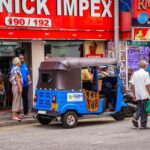
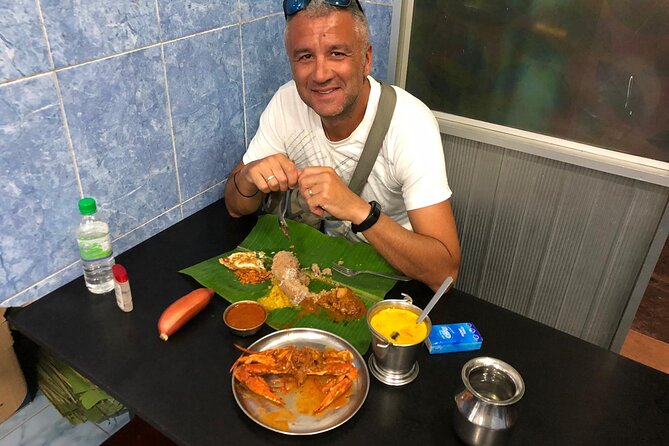
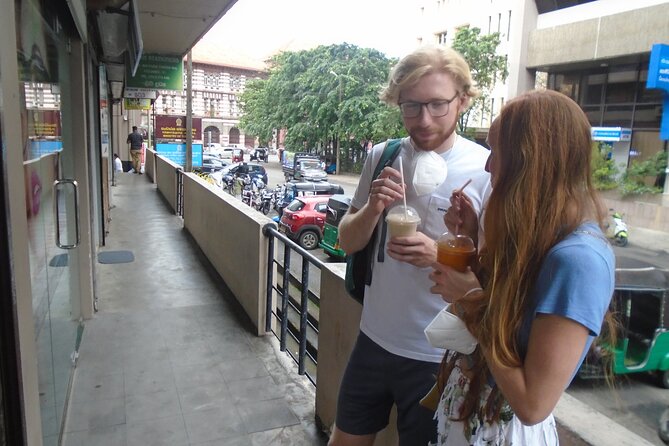
Street food, fast transport, zero guessing. This private tuk-tuk tour pairs you with a driver-guide and runs about 2 to 3 hours with hotel pickup and drop-off, plus 9+ tastings across key Colombo stops like Pettah. I like the tuk-tuk hopping between bites and the chance to try iconic Sri Lankan favorites such as spicy crab curry, hoppers, pittu, and kottu roti. The main drawback to consider is pacing: a few stops can feel rushed, and the tea shop or dessert moment may not match the street-food vibe you want.
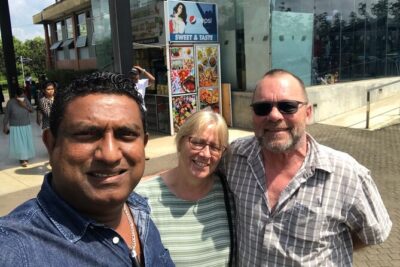
You also get a clean, simple setup with a mobile ticket and a group limited to just your party. Guides like Faizal, Ricky, Romesh, and Vizeer come up often for friendly driving and for steering you to food you would miss on your own, though language can be a factor. If you come with an appetite for spice and curiosity, the payoff is real: you leave Colombo understanding what people actually eat on ordinary days.
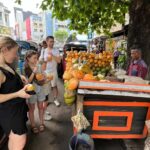
You’ll hit a proper ingredient stop too, with time at the fruit and vegetable market. Just don’t expect a long sit-down lesson—this is a taste-first tour, with some walking and plenty of moving through traffic.
In This Review
- Quick hits before you go
- Why the Tuk-Tuk Food Circuit Makes Sense in Colombo
- Price and Value: What $35 Buys You (and What It Doesn’t)
- Stop-by-Stop Breakdown: From Pettah Cheese Ball to Kottu Roti
- Tea Time at Zylen: Useful Break or Hard Sell
- What You’ll Taste: The Sri Lanka Flavor Map
- Between Stops: The City Glide (and What You Learn While Moving)
- Guides and Communication: Friendly, Fast, and Sometimes Limited
- Fruit and Vegetable Market Stop: Why It Adds More Than Color
- Who This Tour Suits Best (and Who Might Prefer Something Else)
- Quick Tips So You Get the Best Version of This Experience
- Should You Book the Colombo Express Food Tour?
- FAQ
- How long is the Colombo Express Food Tour with 9+ Tastings?
- What does it cost?
- Does the tour include pickup and drop-off?
- Is this a private tour?
- Do I need a printed ticket?
- What food stops are included?
- How long is the tea stop at Zylen Tea?
- Is tea and coffee included?
- Do I need cash during the tour?
- What if the weather is bad or the tour has to be canceled?
Quick hits before you go
- Private tuk-tuk + driver-guide means no stop-hunting and fewer awkward “is this the place?” moments.
- 9+ tastings in 2–3 hours is a fast way to sample Sri Lanka flavors without committing to full meals.
- Pettah chicken cheese ball is an easy first bite to understand the whole tour style.
- Tea shop stop (Zylen Tea) includes tea and coffee time, but it can feel salesy for some tastes.
- Hoppers, pittu, and kottu roti give you three classic textures: crispy bowl, steamed layers, and sizzling stir-fry.
- Fruit and vegetable market adds context, so you see produce before it turns into food.
Why the Tuk-Tuk Food Circuit Makes Sense in Colombo
Colombo street food is everywhere, but finding the right stall and the right timing is another story. This tour solves the hard part with transport that’s made for short hops: you get in, eat, zip forward, repeat. It’s a good fit for a city where traffic and distances can slow you down fast.
The private setup matters too. You’re not sharing a van with strangers who want to split off, you’re doing the route as your group. That gives you a little more breathing room to ask basic questions, especially at food counters where you’d normally just watch and hope.
You’re also dealing with two kinds of local knowledge. One is where to eat. The other is how much to eat. Several people specifically call out that the tour helps you avoid the guesswork, which is exactly what you want when you’re trying multiple dishes in one afternoon or evening.
You can also read our reviews of more food & drink experiences in Colombo
Price and Value: What $35 Buys You (and What It Doesn’t)
At $35 per person, you’re not paying for a guided history lecture. You’re paying for a bundle: hotel pickup and drop-off, a driver-guide, and multiple paid food stops across the city.
In value terms, the math works best if you want variety more than deep storytelling. You’ll get a mix of items across different styles, including spicy curry-type flavors and classic breakfast street foods. The tour description also points to specialties like spicy crab curry, sambol, red banana, and ice-cream as part of the tasting experience, so you aren’t just doing one lane of fried snacks.
The trade-off is that not every stop is going to feel like pure street vendor magic. One common complaint is that the tea shop can feel like a hard pitch, and the dessert (when included) can be simple. If you’re the type who wants “all local, all the time,” you should know this tour is still designed to move efficiently and keep the pace tight.
Stop-by-Stop Breakdown: From Pettah Cheese Ball to Kottu Roti
This is the kind of tour where the first stop sets the tone. In Pettah, you start with chicken cheese ball: a creamy cheese base mixed with chicken. It’s described as the easiest and tastiest cheese ball people ever try, and that makes sense as an opener. It’s friendly, filling, and not too complicated for your first bite.
Why this stop works: Pettah can feel like sensory overload if you’re walking on your own. A guided start gives you confidence. You taste something recognizable enough to anchor your expectations, then the rest of the tour gets more distinctly Sri Lankan.
Next comes Zylen Tea. You get about 45 minutes here, with tea and coffee provided at the tea shop stop. Tea in Sri Lanka isn’t a novelty; it’s a major crop with long ties to colonial-era global trade, and the stop frames it as part of everyday life.
One thing to watch: some people feel this part is more of a sales moment than a cultural one. If you’re the kind of eater who wants more stalls and less shop time, keep that in mind. You still get a useful break from hopping, plus a chance to taste a hot drink in between spicy bites.
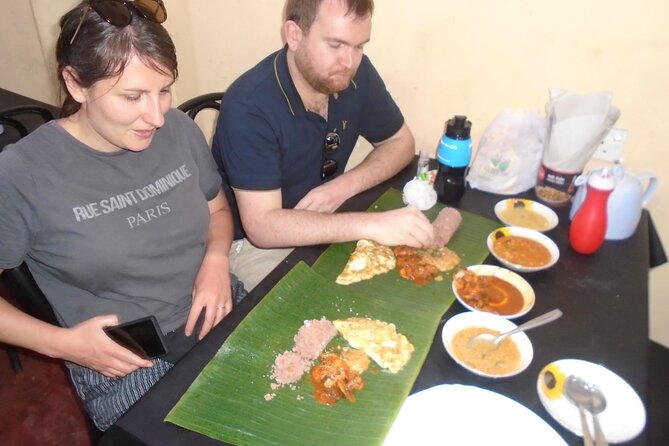
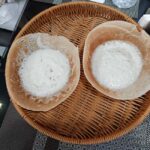
Then you move into the Colombo food classics. You’ll try hoppers, which are thin, bowl-shaped pancakes cooked so the shape holds. As the batter cooks, chefs break the top and fill it, so you get crispy edges and a warm center with whichever filling is on offer.
After that, it’s pittu, a traditional breakfast item made from steamed rice flour mixed with scraped coconut and salt. It’s cooked in a cylindrical bamboo-like vessel (a pittu bambuwa) that shapes the texture into distinct layers.
Why pittu is a smart stop on this tour: hoppers and pittu both teach you the “Sri Lankan pancake” idea, but they don’t taste the same. Hoppers are crisp and bowl-like. Pittu is steamy and layered. You’ll feel the difference without needing a food degree.
Finally, you hit kottu roti, one of Colombo’s best-known street foods. It’s chopped flatbread (godhamba roti) stir-fried with vegetables, and cooked with a sound and speed that makes it feel alive.
Why kottu roti usually lands well: it’s hearty. It’s also the kind of dish you rarely find outside Sri Lanka that way—so it’s a real “only here” feeling. If you request spice (people mention this), you can get it hotter, which helps if you’re trying to taste Colombo rather than just snack around.
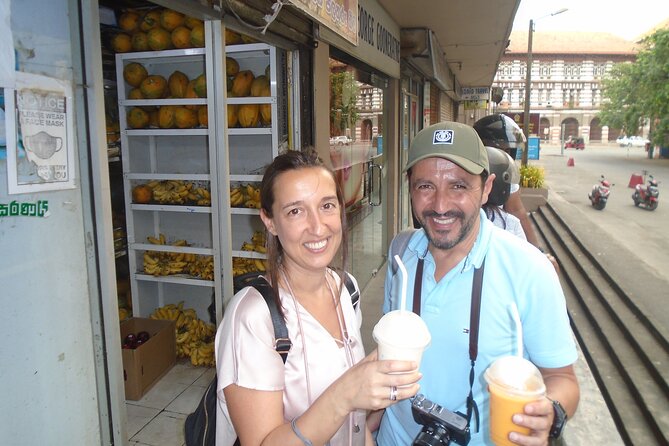
Between these core stops, you also get time at the fruit and vegetable market. You’ll explore the produce selection and see how the colorful ingredients show up long before they become a plate.
Tea Time at Zylen: Useful Break or Hard Sell
This stop is the best example of why you should think about what you want from a food tour. If you want pure street eating, the tea shop can feel off-theme.
If you’re open to learning while you sip, it can be a nice pause. You get about 45 minutes, and tea and coffee are part of the experience. The tea angle also gives you a wider picture: Sri Lanka doesn’t just produce food for local hunger; it has a crop that became globally important.
Here’s my practical advice: treat it like a break between heavier bites. Don’t treat it as the main show. Use the time to reset your appetite and ask simple questions you care about—like what the drink pairs with or what’s popular locally.
What You’ll Taste: The Sri Lanka Flavor Map
Even without studying a menu ahead of time, you can expect a broad spread of Sri Lankan street-food flavors. The tour overview highlights spicy crab curry, sambol (a spicy condiment), red banana, and ice-cream-type sweets, alongside the core dishes in the stops.
That matters because Sri Lankan food isn’t one-note. You’ll see balance between:
- spice and cooling (condiments and sweet finishes)
- crispy and steamed textures (hoppers and pittu)
- quick snacks and filling dishes (cheese ball up to kottu roti)
Also, this tour is heavy on portions. Multiple people strongly suggest you come hungry, and that fits the structure. You’re not just tasting one or two bites per stop if the kitchen can serve more. Plan to finish strong, or be ready to share within your group.
If you’re sensitive to spice, tell your driver-guide early. People mention you can get dishes adjusted on request, which is a lifesaver in Colombo where “a little spicy” can still be seriously spicy.
You can also read our reviews of more tours and experiences in Colombo


Between Stops: The City Glide (and What You Learn While Moving)
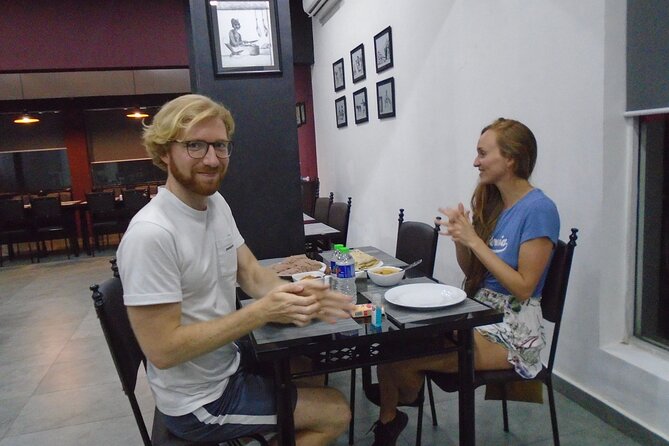
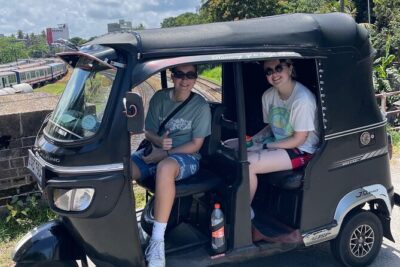
The tuk-tuk ride is not just transport. It’s part of the point. You’ll pass through different parts of Colombo while your driver-guide gives you on-the-ground context tied to the food.
Many guides are praised for pointing out major attractions on the way to the first food destination. That helps you get oriented quickly—especially helpful if Colombo is your first stop in Sri Lanka or you only have a short window.
A quick reality check: it’s still road time, so you’ll feel the pacing. Some people say the total door-to-door timing can run shorter than the broad “2 to 3 hours” range, and others felt certain stops were rushed. If you’re hoping to linger over conversation, choose your questions carefully and accept that this tour is built to move.
Guides and Communication: Friendly, Fast, and Sometimes Limited
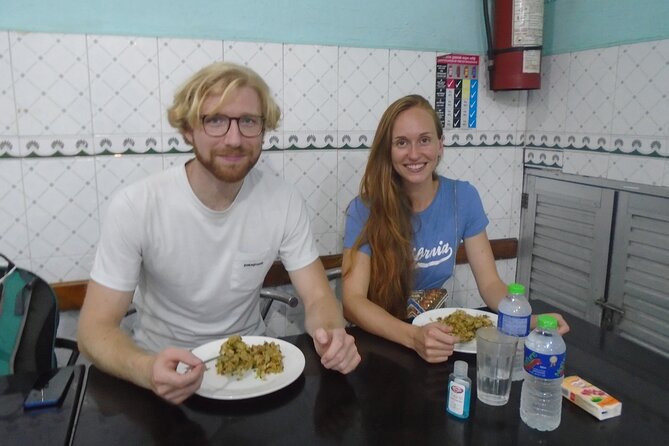
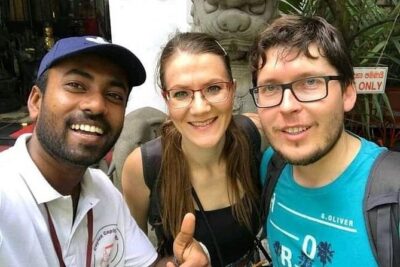
The driver-guide model is the heart of the experience. Names like Faizal, Ricky, Romesh, Ramesh, Marin, and Vizeer show up often, and the repeated theme is simple: friendly, attentive guidance, plus competent driving through traffic.
Communication can be a mixed bag. Some people report language barriers made it harder to understand the deeper food stories. That doesn’t mean you’ll lose the experience—it just means you shouldn’t expect a long lecture about origins, farming methods, or regional history unless your guide happens to go there.
Practical approach for you: ask the most useful questions.
- What is this called and what is it made from?
- How spicy is it locally?
- What should I eat it with?
You’ll get more out of the time that way than trying to force a history lesson in a fast-moving tuk-tuk.
Fruit and Vegetable Market Stop: Why It Adds More Than Color
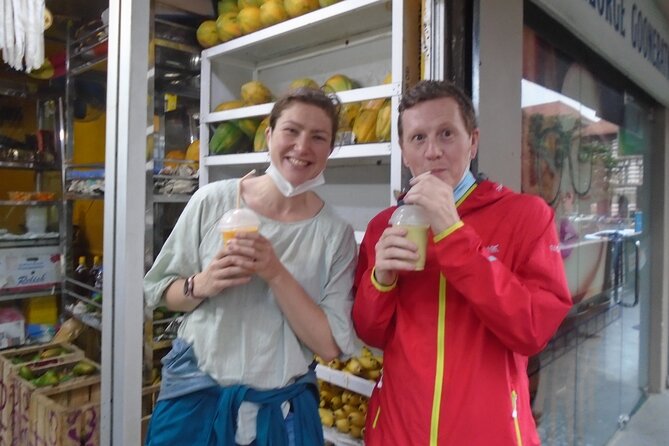
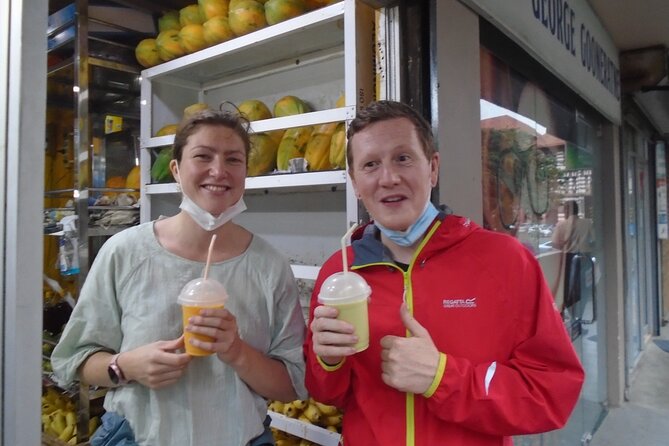
A market stop sounds like a filler add-on until you connect it to the food you’re about to eat. Here, you spend about 15 minutes exploring the fruit and vegetable variety, which helps your brain map ingredients to dishes.
You don’t need to be a serious foodie for that to work. Seeing produce in person makes you understand taste and freshness cues, especially in cuisines where coconut, herbs, and chili show up constantly.
It’s also a smart pause in the route. You’re not only in kitchens and tea shops. You get a visual reset, plus a chance to notice how everyday ingredients look in Colombo.
Who This Tour Suits Best (and Who Might Prefer Something Else)
This tour is best for you if:
- You want multiple Sri Lankan street-food tastings in a short window.
- You like a mix of classic dishes like hoppers, pittu, and kottu roti.
- You’d rather ride through town in a tuk-tuk than figure out tiny local directions.
It’s also a good first-day tour if Colombo is new to you and you want quick orientation. Several people mention it works as a start to a trip because it gives you a fast snapshot of tastes and parts of the city.
This tour may be less satisfying if:
- You want only outdoor stalls and never any shop time.
- You expect deep, step-by-step food history at every stop.
- You’re very sensitive to pace and rushing.
The good news is that even the mixed feedback usually agrees on one point: you leave with a full stomach and a clearer sense of Colombo food.
Quick Tips So You Get the Best Version of This Experience
- Come hungry. This tour is designed to stuff you, not “lightly sample.”
- If you have spice limits, say it early. Ask for mild if you need to.
- Wear comfortable shoes. There’s some walking, though it’s not usually a long trek.
- Bring a little extra cash if you want to buy from market or along the way. One recommendation is to take some cash because stops can tempt you.
- Don’t plan a big meal right before. People mention eating late lunch first can make it harder to enjoy everything.
Should You Book the Colombo Express Food Tour?
Yes, you should book it if you want a fast, practical taste of Colombo with transport handled and a driver-guide steering the food choices. The strongest reasons to go are the 9+ tastings, the tuk-tuk ride that gets you around efficiently, and the chance to hit key Sri Lankan staples like hoppers, pittu, and kottu roti.
Skip it or choose a different style if you need every stop to feel like street vending with no shop moments, or if you’re expecting a slow, story-heavy food education. This tour is built for motion and eating. If that matches your travel style, it’s a great use of time.
FAQ
How long is the Colombo Express Food Tour with 9+ Tastings?
It runs about 2 to 3 hours.
What does it cost?
The price is $35.00 per person.
Does the tour include pickup and drop-off?
Yes, pickup is offered, and hotel pickup and drop-off are included.
Is this a private tour?
Yes. It’s private, and only your group will participate.
Do I need a printed ticket?
No. The tour uses a mobile ticket.
What food stops are included?
You’ll stop in areas like Pettah for a chicken cheese ball, have a tea shop stop at Zylen Tea, and try dishes such as hoppers, pittu, and kottu roti. You also visit the fruit and vegetable market.
How long is the tea stop at Zylen Tea?
It’s about 45 minutes.
Is tea and coffee included?
The tea shop stop includes tea and coffee as part of the experience.
Do I need cash during the tour?
You might want a little cash, since some stops are interesting and you may wish to purchase something.
What if the weather is bad or the tour has to be canceled?
The experience requires good weather. If it’s canceled due to poor weather, you’ll be offered a different date or a full refund. It can also be canceled if the minimum number of travelers isn’t met, with either a different date/experience or a full refund.