REVIEW · COLOMBO
Half Day City Tour of Colombo
Book on Viator →Operated by Apple Vacations Pvt Ltd · Bookable on Viator
Colombo in half a day feels like a shortcut. This tour strings together major stops—temples, mosque architecture, parks, and colonial-era landmarks—so you can get your bearings fast without burning your whole day in traffic.
I like the hotel pickup and drop-off because it removes the hardest part of sightseeing: figuring out timing and transport. I also like the included king coconut, seasonal fruits, water, and an English-speaking driver in an air-conditioned vehicle, which helps on a warm day when your energy is already limited.
The main thing to consider is that some sights are timeboxed and entrance fees are not included. Also, if you’re hoping for constant, in-depth narration at every stop, experiences can vary—so go in with the right expectations and you’ll enjoy it more.
In This Review
- Key things to know before you go
- A half-day Colombo reset: the value of a tight route
- Price and what you really get for $30
- Hotel pickup that actually matters: timing, comfort, and rules
- Gangaramaya Temple: lavish Buddhism in a compact visit
- Jami Ul-Alfar Mosque: Indo-Saracenic details you can actually notice
- Viharamahadevi Park and Independence Square: shade and symbols
- Pettah, the old Fort area, and the old rail line story
- Sri Ponnambala-waneswaram Temple: South Indian granite and Shiva
- BMICH and Nelum Pokuna street: modern city life meets local craft
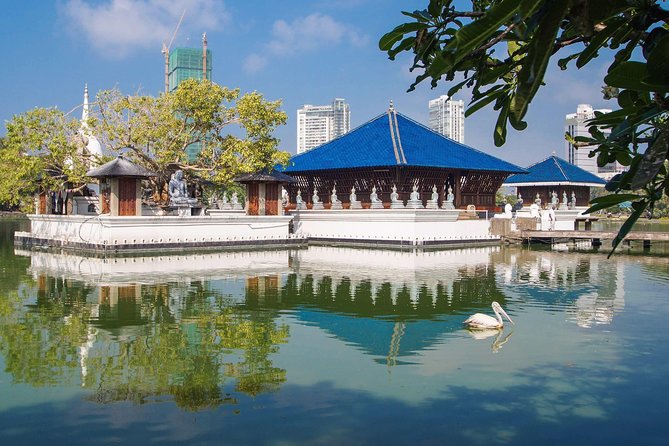
- Lighthouse Galley area: a working colonial-era landmark
- Galle Face Green and the coast: where you can slow down
- Sri Kailawasanathan Swami Devasthanam Kovil: a colorful finish
- Guide quality: what you should expect, and how to get more from it
- Who this Colombo half-day tour suits best
- Quick FAQ
- FAQ
- How long is the Half Day City Tour of Colombo?
- How much does it cost?
- What’s included in the tour price?
- Are entrance fees included for the sights?
- What should I wear for temple visits?
- Do I need to remove shoes anywhere?
- How big is the group?
- What happens if the weather is bad?
- Should you book this Colombo half-day tour?
Key things to know before you go
- Hotel pickup makes it easy: You start and end at your hotel with AC transport, saving time and hassle.
- 3 to 4 hours covers a lot: The route is designed for quick impressions of key neighborhoods.
- Temple and mosque stops follow clear rules: Dress code and shoe rules matter, and re-entry isn’t allowed once you leave.
- Some stops require extra money: Entrance tickets aren’t included for certain sights.
- Small group size (max 15): You’ll usually move at a comfortable pace without a huge crowd.
- Guide quality can affect the vibe: Some drivers add great context, while others focus more on driving and logistics.
A half-day Colombo reset: the value of a tight route
If Colombo is your first stop in Sri Lanka, you need two things: orientation and momentum. This tour gives you both by bouncing between the city’s big landmarks in roughly 3 to 4 hours, using a private vehicle so you don’t waste time negotiating tuk-tuks or buses.
What’s smart here is how the stops balance “pretty” with “useful.” You’re not only chasing photos—you’re seeing the places that tell you how Colombo works, from religious sites to markets and government-era buildings. You’ll also get a quick hit of both calmer spaces (parks, the coast) and busier ones (Pettah and the old Fort area).
You can also read our reviews of more city tours in Colombo
Price and what you really get for $30
At $30 per person, this is an easy add-on for most budgets—mainly because the price includes the stuff that usually costs time and energy: hotel pickup, air-conditioned transport, and a professional English-speaking driver. The tour also includes practical refreshment items—seasonal fruits, water bottle, and king coconut—which can help a lot when you’re between meals.
The “watch-out” on value is that entrance to sights isn’t included. So your final spend depends on which stops charge tickets on the day you go. Your best move is to treat the $30 as the tour fee for transport + route, then budget a bit extra for admissions and any optional experiences you decide to add.
One more small cost consideration: gratuity for the driver isn’t included. Tips are always personal, but if you like good service, plan for it.
Hotel pickup that actually matters: timing, comfort, and rules
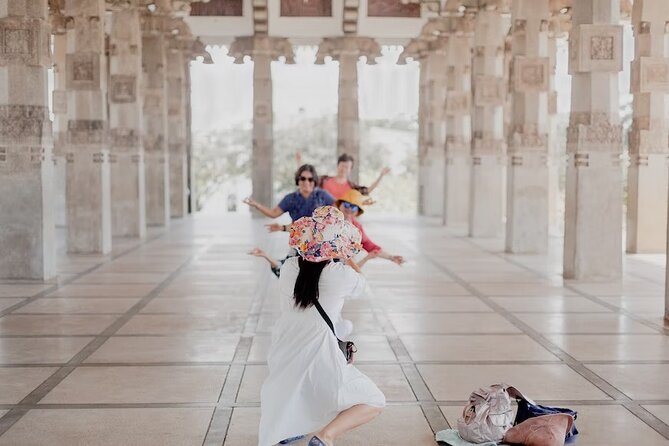
This is the kind of tour where logistics can make or break the experience. Pickup is included, and the vehicle is air-conditioned, which is a big deal in Colombo’s heat and traffic.
Two practical notes you should follow:
- Pickup time can vary: pickup starts before the listed tour time. You’re asked to contact the operator to confirm your exact pickup time.
- Re-entry isn’t allowed after you leave a venue: once you step out of a stop, you won’t be able to re-enter later. So if you want a longer look, plan to use your time well instead of popping out and back in.
Inside the vehicle, there are simple behavior expectations—no littering, no smoking—and you’ll want to respect local rules. You’ll also want to bring sunscreen and a hat, plus sunglasses for the bright coastal light.
Gangaramaya Temple: lavish Buddhism in a compact visit
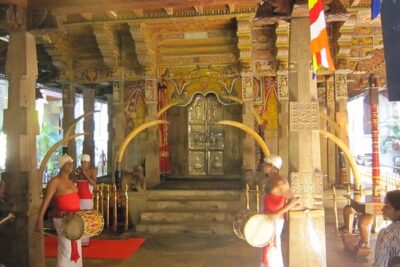
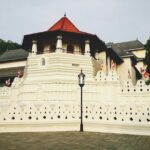
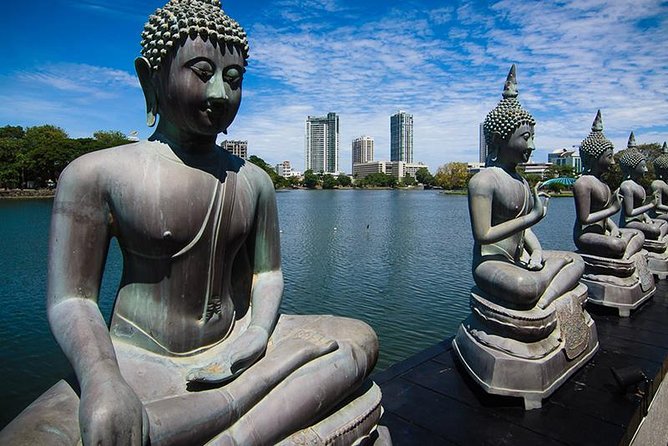
Gangaramaya Temple is one of Colombo’s most recognizable religious sites, and it’s the kind of place where you instantly understand why it’s famous. The temple is dedicated to Buddhism and dates to just over 120 years ago, with lavish architecture and statues that reflect Sri Lankan influences alongside Chinese and Thai touches.
Expect about 45 minutes here. That’s long enough to see key features, but not long enough for a full, slow “study tour.” Dress matters: you’ll want clothing that covers shoulders and knees, and you’ll need to follow the shoe rule if you enter a Buddha or temple space.
If you’re the type who likes structure, this stop is great. If you want a deep personal pace, keep your expectations realistic: this is a half-day tour, and the schedule moves.
My advice: arrive mentally ready to look, photograph, and absorb, then move on. You’ll get more enjoyment that way than trying to “finish” the temple in one quick go.
Jami Ul-Alfar Mosque: Indo-Saracenic details you can actually notice
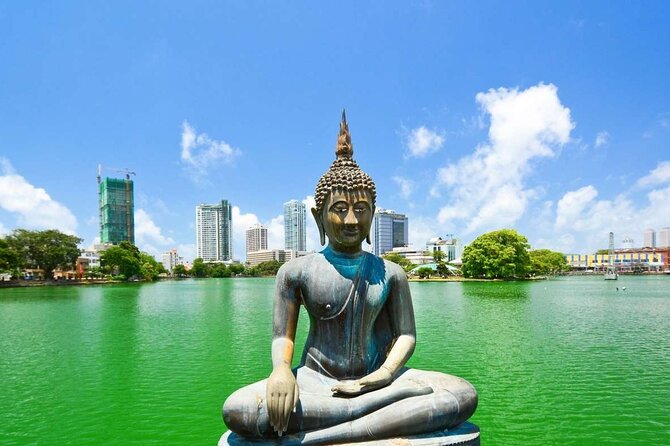
Next comes a quick stop at Jami Ul-Alfar Mosque, where the architecture is Indo-Saracenic—so you get domes shaped like pomegranates. The most striking detail is described in a way you can’t miss: each brick is painted red or white and arranged in contrasting designs.
This stop is shorter—around 10 minutes—but it’s also a good reminder that Colombo isn’t one-style, one-faith, one vibe. The juxtaposition is part of the point: religion and culture are mixed through daily city life, not separated into separate tourist zones.
Even with limited time, you can still do something useful here: zoom in with your camera and focus on patterns rather than trying to take everything in at once.

Viharamahadevi Park and Independence Square: shade and symbols
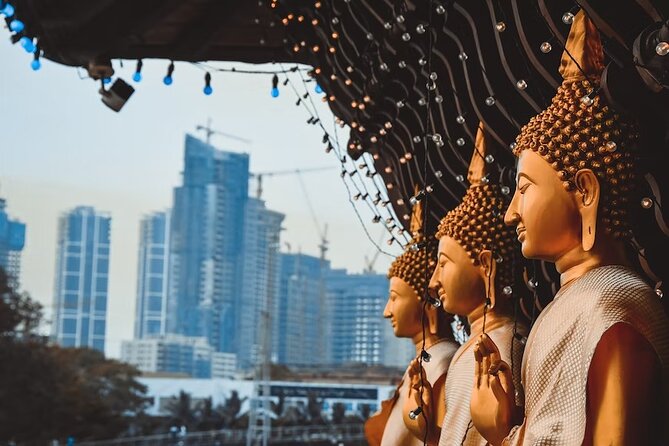
After the religious stops, the tour shifts into “walk a bit, breathe a bit” territory.
You’ll spend time in Viharamahadevi Park (also known as Victoria Park). It’s described as the largest, oldest, and most colorful park in central Colombo, and it’s ideal for a slower moment: shady walking, a breather, and a chance to reset before the busier areas.
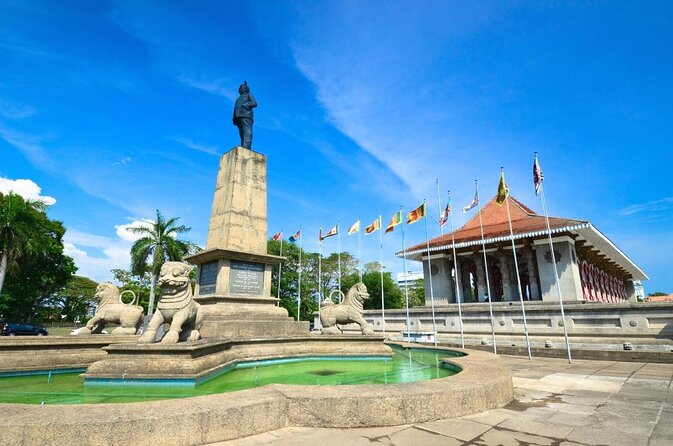
Then there’s Independence Square in the Cinnamon Gardens district, built around the Independence Memorial Hall. You’ll likely get about 15 minutes, so treat it like a visual marker: it helps you understand the city’s identity and how public spaces connect to national pride.
My favorite way to use these park and square stops: don’t just look around—sit for a minute if you can. Even a short pause changes how you remember the tour.
Pettah, the old Fort area, and the old rail line story
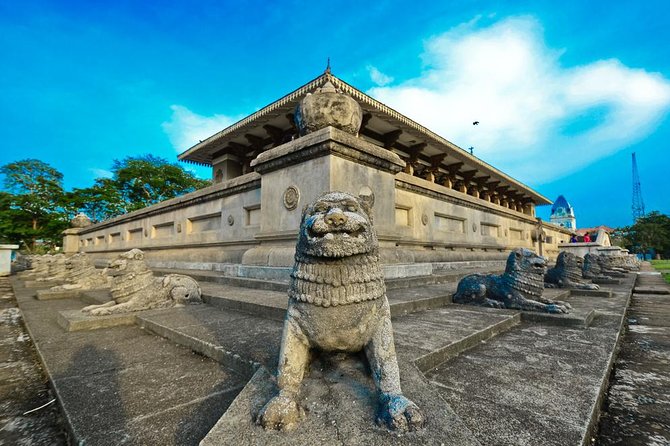
Pettah is the city’s classic “energy zone.” It’s one of Colombo’s oldest districts, and it’s described as the most ethnically mixed area in the country. The mix isn’t abstract—you’ll see large religious buildings side by side with everyday market life and stalls.
This tour also points out the historic Coastal Railway Line, which was started in the late 1800s by the British. The line began in 1877, and it’s connected to the development of the old Fort region, which remains one of Colombo’s busiest areas today.
You may also pass several religious landmarks in this general stretch, including St Anthony’s Church and Sri Ponnambala-waneswaram Temple (Kotahena). These stops are useful because they show how different communities built recognizable spaces that still function in everyday life.
What to expect practically: Pettah is not a place for slow wandering on a schedule. You’ll want comfortable shoes and the ability to move quickly for short stops.
Sri Ponnambala-waneswaram Temple: South Indian granite and Shiva
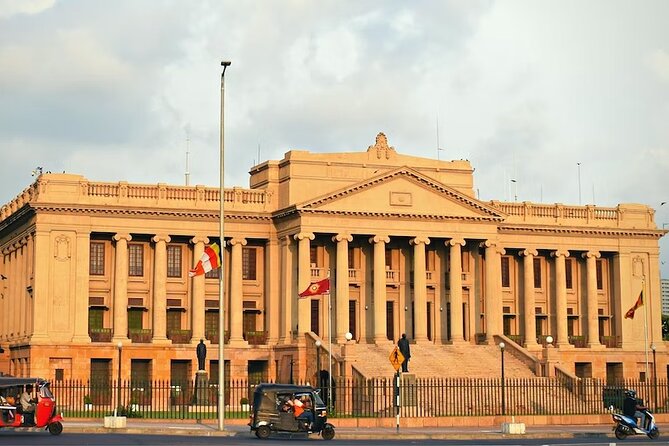
This is one of the stops where Colombo’s cultural mix becomes very visible.
Sri Ponnambala-waneswaram Temple is highlighted as a strong example of Dravidian architecture, built using South Indian granite. It’s dedicated to the Hindu god Shiva, which gives the site its specific devotional character.
You’ll have about 30 minutes at the nearby temple stop(s) in this part of the route, though the exact timing can shift with traffic. Either way, you should plan for photo time and for the practical rules: when you enter a Hindu temple (and Buddha temples), shoes and slippers must be removed.
My tip: bring shoes that slip off easily and that you can also put back on fast. This saves stress when everyone is trying to move as a group.
BMICH and Nelum Pokuna street: modern city life meets local craft
Not every stop is “old world.” The tour includes a visit near BMICH—the Bandaranaike Memorial International Conference Hall. It’s described as a major convention center, with over 16,000 square feet of floor space, which signals how Colombo hosts events and big public gatherings.
From there, you’ll be in the zone where local art shows up as part of everyday buying and gifting. The tour mentions the Nelum Pokuna street artisans, where Sri Lankans purchase art to decorate homes, hotels, offices, and to bring back as gifts. Even if you don’t buy anything, this is a good moment to watch how local creative work is integrated into daily commerce.
Lighthouse Galley area: a working colonial-era landmark
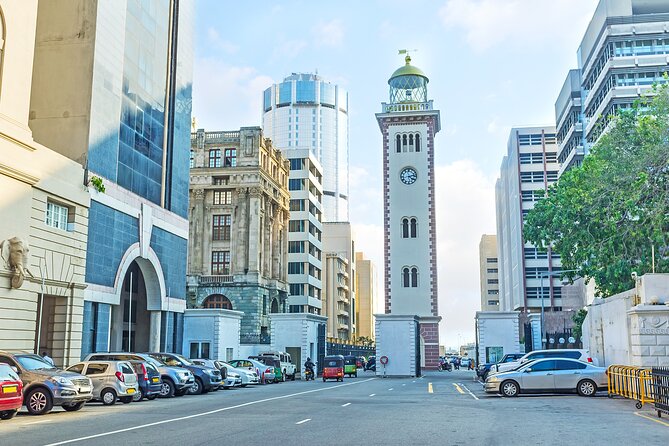
Next up is Light House Galley. The lighthouse is noted as one of the few colonial-era lighthouses still operational. There’s also a local backstory about its commissioning, including the idea that it helped workers be punctual.
This stop is around 10 minutes, so don’t treat it like a full museum visit. Instead, treat it like a photo stop with context: you’re looking at a specific piece of Colombo’s coastal infrastructure and colonial-era footprint.
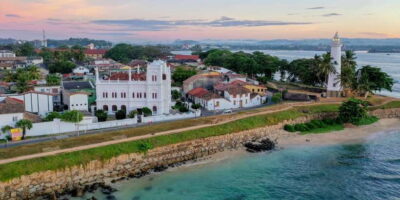
The route also includes the famous tower built in the early 20th century by a Parsi family named Khan from Bombay. It remains today and is described as a four-story tower on a landscaped roundabout with a fountain.
Galle Face Green and the coast: where you can slow down
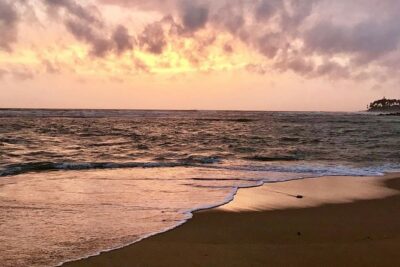
One of the tour’s promised features is time at Galle Face Green, a coastal park. Even if your stop here is short, this is your chance to switch gears—less temple, more breeze.
Galle Face Green is the kind of place where you can actually enjoy the contrast. After hours in city streets and religious sites, the sea air and open space help your brain file Colombo as more than “traffic and buildings.”
Practical idea: if the day is hot, use the coast moment to hydrate and take a few calm photos without rushing.
Sri Kailawasanathan Swami Devasthanam Kovil: a colorful finish
The tour ends with another strong temple stop: Sri Kailawasanathan Swami Devasthanam Kovil. The emphasis here is on beauty and painted religious scenes, with elegant paintings of gods and goddesses.
You’ll have about 30 minutes here, and you should again expect the temple rules around dress and shoe removal. If you’re photographing, keep an eye on where you stand—temples are active devotional spaces, not just a sightseeing set.
This is also a good place to reflect on what you’ve just seen. Colombo’s religious sites are not identical copies of each other. You’ll notice different architectural choices, materials, and devotional details—then you’ll feel the city’s cultural layering more clearly.
Guide quality: what you should expect, and how to get more from it
Your experience will depend on your driver/guide, and the good news is there’s evidence of excellent service. For example, a guide named Lalit is praised for being friendly, humble, and for delivering what was promised. Another team—Navi and Bala—is described as helpful and responsive with questions, while Keerthi is mentioned for being friendly and accessible and even going the extra mile with a personal stop for an old school reunion.
At the same time, there are also signs that not every guide style matches every expectation. One key downside that pops up is when a guest wanted deeper history explanations but felt the experience was more about pointing out buildings than narrating stories.
So here’s your best approach: ask questions. If you want more context, ask for it early—then you’ll likely get better answers and a more satisfying tour.
If you need walking adjustments, it’s also worth knowing one guide supported a guest with back problems by making only a few stops with steps. That tells me your guide can sometimes adjust pacing when they understand the situation.
Who this Colombo half-day tour suits best
This tour fits you if:
- You want a structured 3–4 hour overview of central Colombo.
- You prefer a driver who can handle logistics and keep the schedule moving.
- You want a mix of temples, markets/old neighborhoods, and parks without planning multiple taxis.
It may feel less perfect if:
- You want a slow, deep, sit-down kind of museum experience.
- You expect detailed history narration at every stop, continuously.
- You dislike shoe-removal and dress-code requirements.
Quick FAQ
FAQ
How long is the Half Day City Tour of Colombo?
It runs about 3 to 4 hours, and the exact timing can change based on time of day and traffic.
How much does it cost?
It’s $30.00 per person.
What’s included in the tour price?
You get hotel pickup and drop-off by air-conditioned vehicle, a professional English-speaking driver, seasonal fruits, a water bottle, and king coconut.
Are entrance fees included for the sights?
No. Entrance to sights is not included, and you’ll see notes like admission ticket not included at certain stops.
What should I wear for temple visits?
You should follow the temple dress rule: clothing that covers shoulders and knees. Long pants and a shirt or scarf for your shoulders are advised, plus closed shoes.
Do I need to remove shoes anywhere?
Yes. When you enter a Hindu temple or a Buddha temple, shoes and slippers must be removed.
How big is the group?
The tour has a maximum of 15 travelers.
What happens if the weather is bad?
This experience requires good weather. If it’s canceled due to poor weather, you’ll be offered an alternative date or a full refund.
Should you book this Colombo half-day tour?
If your goal is to make Colombo make sense fast, I’d book it. The combination of hotel pickup, AC transport, short, focused stops, and included refreshments makes it a solid value for a half-day window.
Just go in with two smart expectations: bring budget for entrance fees at ticketed stops, and know that guide storytelling can vary. If you ask questions and pace yourself for the time limits, you’ll walk away with a clearer map of Colombo—and a better idea of where you’d want to return for longer.