REVIEW · COLOMBO
Day Tour Anuradhapura from Kandy by Lux Tours Lanka
Book on Viator →Operated by Lux Tours Lanka · Bookable on Viator
A day in Anuradhapura feels bigger than the clock. This private run through Sri Lanka’s ancient dagobas and temples trades museum silence for living religious sites, and it’s handled with comfortable, friendly guidance from Lux Tours Lanka, including drivers and guides like Laxman, Kesara, and Chana. You’ll like the mix of iconic monuments (like the elephant-guarded Ruwanweli Maha Seya) and quieter, scenic stops such as Isurumuniya Temple by a lotus pond. One drawback to keep in mind: there’s an entrance fee at Isurumuniya, and one traveler reported a possible post-booking price increase—so confirm the final total up front.
You can also count on smooth logistics for a day that’s otherwise long on paper. Pickup is offered and you’ll receive a mobile ticket, and the tour is private, meaning it’s only your group. The overall timing is flexible (listed as roughly 5 to 15 hours), so it’s best if you don’t have tight connections or late-night plans.
In This Review
- Key highlights I’d plan around
- Why Anuradhapura feels different from other ruins
- Price and value: what $125 really buys you
- The temple by the lotus pond: Isurumuniya
- Ruwanweli Maha Seya: the white dagoba and the elephant wall
- Abayagiriya area: the massive dome that used to be taller
- Muragala guard stones and Ratnaprasada: a shorter stop with context
- Mihinthale mountain peak: Buddhism’s origin story on a hill
- What makes Lux Tours Lanka’s service worth your attention
- Timing: plan for a full day, but don’t panic
- Small practical tips that make a big difference
- Should you book this Anuradhapura day tour with Lux Tours Lanka?
Key highlights I’d plan around
- Isurumuniya Temple’s lotus-pond setting with carved elephant imagery and a deep old date tied to Devanampiya Tissa
- Ruwanweli Maha Seya’s elephant frieze—344 standing elephants lining the wall, many restored in later times
- The scale of Abayagiriya/Jetavanarama area—a dome that once may have reached 120m, now around 70m
- Mihinthale’s Buddhist origin story linked to Mahinda and King Devanampiyatissa
- Private guide attention that tends to make the day feel less rushed and more personal (names like Laxman, Kesara, Chana show up)
Why Anuradhapura feels different from other ruins
Anuradhapura isn’t just a pile of stones. It’s a sprawling archaeological site with huge brick dagobas, old pools, and crumbling temples that still connect to daily religious life. That matters because you’re not only looking at the past—you’re moving through a place that’s still used. The result is a different mood than the more “museum-like” feeling you might get at some other heritage sites.
What I like most is the emotional pacing. A white stupa with a wall of elephants doesn’t read as “just history.” It reads as intention: power, faith, and art working together. Then you swing to smaller, more intimate moments—like a rock temple set beside a lotus pond—so the day doesn’t blur into one long blur of monuments.
You can also read our reviews of more tours and experiences in Colombo.


Price and value: what $125 really buys you
At $125 for a private day tour, the value comes down to two things: time saved and human support. A route like this includes multiple major stops, and if you’re short on daylight, you’ll feel the benefit of not having to figure out transport and sequencing. The tour also lists pickup and a mobile ticket, which usually means fewer last-minute headaches.
Still, there’s one practical wrinkle you should take seriously. One traveler reported that after booking and paying, the operator contacted them saying the price had gone up, and they were asked to pay the new difference in cash. That doesn’t mean it will happen to you—but it does mean you should treat final pricing like an important detail. Before you lock it in, ask for confirmation of the all-in price you’ll pay, and keep that confirmation handy.
The temple by the lotus pond: Isurumuniya
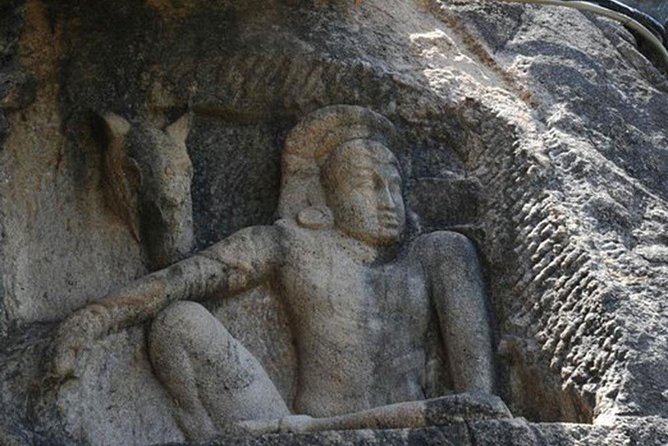
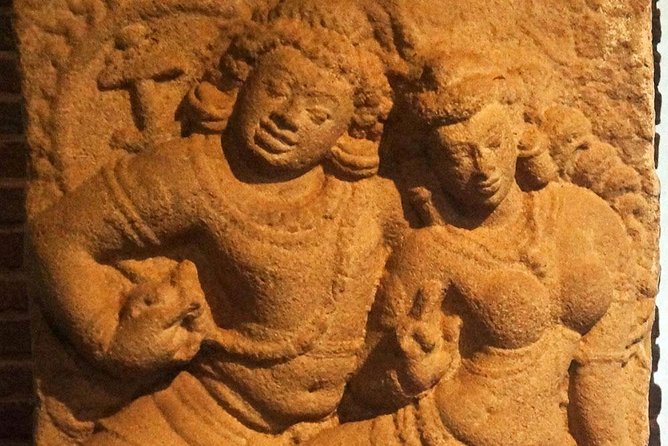
This stop is short—about 30 minutes—but it’s the kind of place that can reset your attention. Isurumuniya is a rock temple dating to the reign of Devanampiya Tissa (r 307–267 BC). The temple sits around a lotus pond, and at one corner you’ll see carvings of elephants that look like they’re playfully splashing water.
Why I think this stop is worth prioritizing: it’s not only about the age. The setting gives you an immediate sense of “how people used to live around these monuments.” Also, rock + pond + carvings makes for photos that feel more than decorative. You’re capturing form and story together.
The main thing to plan for: admission is not included for Isurumuniya. If you prefer to travel with minimal friction, budget for that extra ticket cost and keep small change or a payment method you know works for ticketing.
Ruwanweli Maha Seya: the white dagoba and the elephant wall
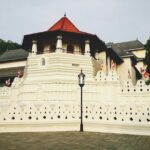
Ruwanweli Maha Seya is one of the big hitters in Anuradhapura, and you get a focused visit—about 15 minutes. It’s a magnificent white dagoba, and the most eye-catching detail is the wall frieze featuring 344 elephants standing shoulder to shoulder.
There’s also a useful bit of context here. The description notes that most of the elephants you see today are modern replacements of earlier originals (with an original date referenced around 140 BC). So what are you really seeing? A layered monument—ancient in concept and modern in restoration. That’s not a downside; it’s a reminder that heritage is maintained, not frozen.
Potential drawback: because the time here is brief, try to arrive ready. If you get stuck reading everything word-for-word, you can lose the moment. Instead, look for the elephant frieze first, then let your eyes travel upward to the dagoba form. Even in a short stop, you’ll likely feel the scale.
Abayagiriya area: the massive dome that used to be taller
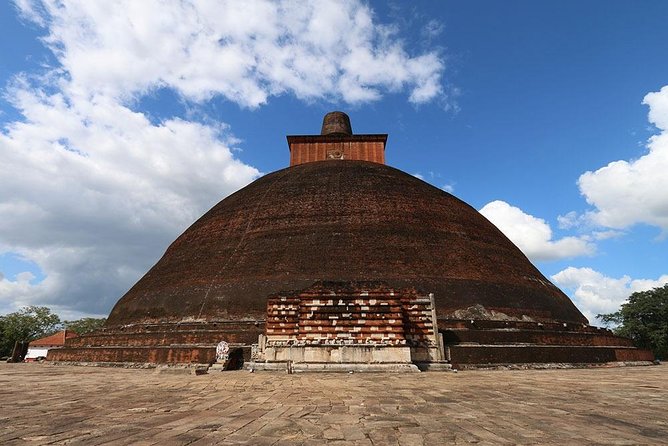
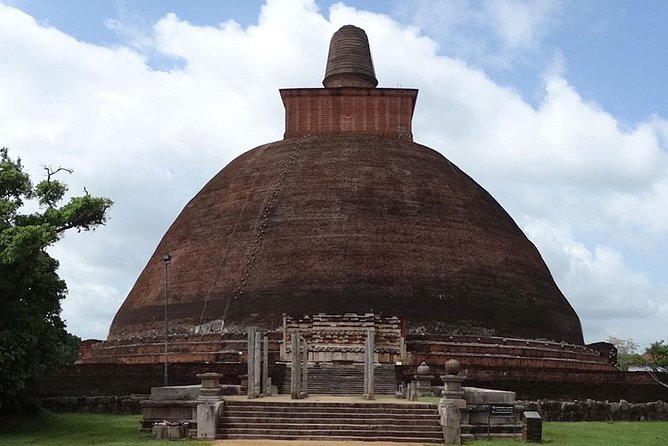
Next up is the Abayagiriya Stupa area, also around 15 minutes. The key feature described is the massive dome of the Jetavanarama Dagoba that rises over the eastern part of Anuradhapura. It was built in the 3rd century by King Mahasena.
Here’s the kind of detail that makes ruins feel alive: the structure may have originally topped out around 120m, but today it’s about 70m—still enormous. The comparison is also noted with Abhayagiri, so this isn’t one isolated monument. It’s part of a bigger architectural conversation across the ancient city.
One consideration: because this is another compact stop, it helps to understand what you’re aiming to notice. Don’t treat it like a “walk and hope” photo stop. Instead, stand back enough to take in the dome’s shape, then move closer to appreciate the brick massing. If you’re with a guide, ask a quick question about the dome’s original height versus what remains—you’ll likely get a more meaningful explanation in 30 seconds than you could pull from signage alone.


Muragala guard stones and Ratnaprasada: a shorter stop with context
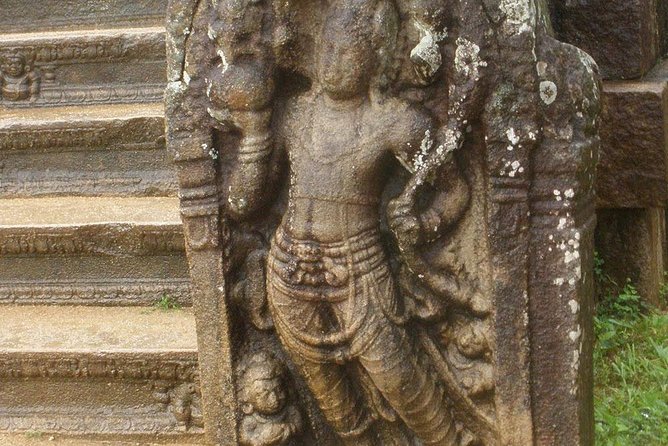
You’ll also pause at Muragala (Guard Stone) Ratnaprasada for about 15 minutes. This stop is listed as free admission, and the name alone hints at what to expect: stone guardian elements that frame sacred space.
Even with limited time, these smaller stops can be the glue that makes the day coherent. Big monuments can sometimes make you feel like you’re floating above the place. Guard-stone details bring you back down to the human scale—someone planned for thresholds, protection, and ritual movement.
The practical tip here is simple: don’t treat this as downtime. Even if it’s quick, give it your attention. These are the places where you might notice carvings or structural clues that explain how the larger structures functioned in the city layout.
Mihinthale mountain peak: Buddhism’s origin story on a hill
Mihinthale is the mountain peak stop near Anuradhapura, around 30 minutes. The importance here is belief and storytelling: Sri Lankans identify this as the site where Buddhist monk Mahinda met King Devanampiyatissa (Devanampiyatissa / Devanampiyatissa Tissa references appear across Anuradhapura’s story) and helped inaugurate Buddhism in Sri Lanka.
That kind of origin narrative changes your perspective. You’re no longer just admiring architecture. You’re linking the physical site to a turning point in religious history. Even if you don’t know the details beforehand, you’ll likely come away with a clearer sense of why these places matter to local identity, not just archaeology.
Since this is a mountain peak, you should also think about comfort. Wear something easy to move in, and plan for some uneven footing. The time allotted is still moderate, but it’s long enough that comfort matters more than you’d expect.
What makes Lux Tours Lanka’s service worth your attention
The strongest positive theme tied to Lux Tours Lanka is how the day is handled once you’re on the road. People describe the service as very friendly, informative, and comfortable, with staff who are helpful and responsive to requests. Names like Laxman show up in one story as a genuinely caring person, and Kesara and Chana are mentioned as professional drivers who were also funny—so you’re not stuck in stiff, scripted small talk all day.
That “tone” matters, especially on a long day with multiple sites. When the guidance is clear, you move faster without feeling rushed. And when someone can adjust for your needs, the experience can feel smoother than the raw itinerary suggests.
One practical caution from the same set of feedback: if pricing changes after you pay, that can become stressful. The fix is easy—get a clear statement of what you’re paying and what’s included before you hand over money. Then you can enjoy the day instead of managing paperwork.
Timing: plan for a full day, but don’t panic
The tour duration is listed broadly as about 5 to 15 hours. That spread is huge, and it’s probably tied to your pickup timing and the day’s flow. So here’s how I’d plan it:
- Treat it like a major day out, not a quick half-day.
- Avoid booking anything that depends on you being back at a precise time later that night.
- If you have transport or lodging arrangements after the tour, build a buffer.
Because Anuradhapura visits include multiple short stops (mostly 15 minutes, plus 30 minutes at Isurumuniya and Mihinthale), the day can feel “efficient.” Efficiency is great—until you’re tempted to cram other things in right after. Give yourself breathing room.
Small practical tips that make a big difference
You can enjoy these sites more when you plan for how they’ll feel in person, not just on a map.
- Bring sun protection. Dagobas and open areas can mean long bright stretches.
- Dress for temple visits. You’ll be visiting holy places still in use, so choose clothing that feels respectful and comfortable for warm weather.
- Expect brief visits. Many stops are around 15 minutes. If you want deeper time, ask your guide one question and focus your attention.
- Budget for Isurumuniya admission. It’s explicitly not included, so handle it without last-minute stress.
Should you book this Anuradhapura day tour with Lux Tours Lanka?
If your goal is to see major Anuradhapura highlights in one day without juggling transport, then yes, this is a solid choice. The private format plus pickup and a mobile ticket makes it easier, and the service reputation—friendly, informative, comfortable—suggests you’ll be in good hands. I’d also give it extra credit for balancing big monuments with a scenic temple moment at Isurumuniya and a story-driven stop at Mihinthale.
Book with extra care if:
- You strongly dislike any chance of price changes after payment. Confirm the final total and keep it in writing.
- You hate that Isurumuniya has an extra admission cost. It’s not huge, but it’s a known add-on.
- You have a tight schedule right after pickup, since the listed duration range is wide.
If you want a meaningful day focused on key Buddhist sites—done with calm, human support—Lux Tours Lanka is worth your time.