REVIEW · COLOMBO
Colombo City Tour By Tuk Tuk (Include Lunch)Morning & Evening
Book on Viator →Operated by Orwell Ceylon Tours By Tuk Tuk · Bookable on Viator
Four hours, a dozen Colombo stories. This tuk tuk tour gives you a fast, street-level intro to the city’s faith sites and colonial landmarks, from Gangaramaya Temple to the Pettah market lanes. You’ll also get a proper food finish with lunch (or dinner, depending on the time slot) and a tea/coffee stop that’s built into the route.
I like that the itinerary balances big-name sights with under-the-radar angles, like the Portuguese-era Hindu kovil tucked behind Fort Railway Station. I also like the practical mix of included entries, bottled water, and a short time window that helps you get your bearings fast without turning the day into a logistics puzzle.
One consideration: two major photo stops have extra admission fees—Gangaramaya Temple and Colombo Lotus Tower—so it helps to budget a little more if you want everything fully inside.
Private tuk tuk around Colombo’s key neighborhoods starting at Galle Face Hotel
Faith-and-streets route with Buddhist, Hindu, and Islamic landmarks in a tight loop
Pettah Market time plus heritage buildings like Old Town Hall and Wolvendaal Church
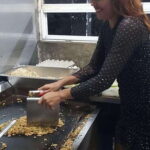
Lunch/dinner and tea/coffee included to keep the tour from feeling like a checklist
A few extras to plan for at Gangaramaya Temple and Colombo Lotus Tower
In This Review
- How This 4-Hour Tuk Tuk Tour Actually Feels
- Gangaramaya Temple: Big Colombo Faith With a Budget Note
- A Portuguese-Era Hindu Kovil You Reach Through the Fort Area
- Jami Ul-Alfar Mosque and Pettah: When Architecture Meets Street Life
- Old Town Hall: Colonial Architecture in the Middle of Shopping Streets
- Independence Memorial Hall and Victoria Park: Colombo’s Post-Colonial Mood
- Galle Face Green, Galbokka Lighthouse, and the Fort’s Old Entry
- Lotus Tower Photos and Wolvendaal Church With Still-Active Meaning
- Fort Railway Station to Sambodhi Chaithya: Colombo in Motion
- Port City Colombo: The New Side of the Same City
- Lunch, Tea, and Why the $34.90 Price Makes Sense
- Who Should Book This Tour—and Who Might Want Something Else
- Should You Book It? My Take
- FAQ
- How long is the Colombo City Tour By Tuk Tuk?
- Where does the tour start and end?
- Is lunch included?
- Does the tour include a tea or coffee stop?
- Which admissions are not included?
- Is this tour private?
- What’s included besides admissions?
How This 4-Hour Tuk Tuk Tour Actually Feels
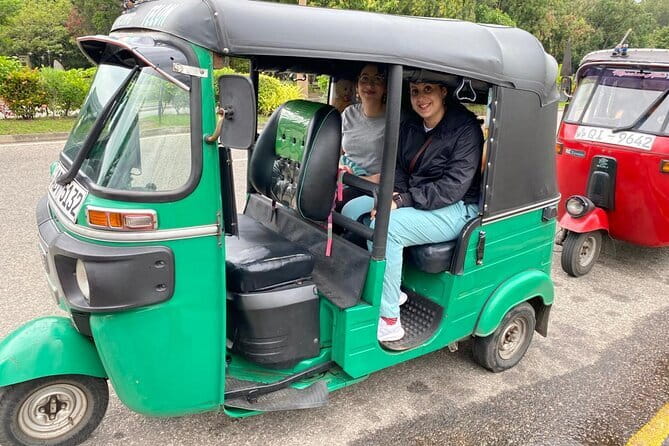
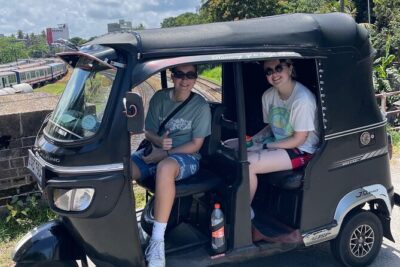
This is a 4-hour Colombo orientation tour that’s built for momentum. You start at Galle Face Hotel and ride between neighborhoods in a tuk tuk, then spend most of your time out on foot at key stops. It’s private, so you’re not stuck watching other groups figure out where to meet the guide.
You’ll also get a mobile ticket and bottled water, which sounds small until you’re walking the Pettah lanes and realizing Colombo sun doesn’t care about your sightseeing schedule. Dress for temples and churches: shoulders covered, modest shorts or loose pants, and something simple that makes it easy to move.
Because there are many stops in a short day, the pace stays “see it, learn it, move on.” That’s great for first-timers. If you love lingering and reading every plaque for an hour, you may feel slightly rushed at some points.
Gangaramaya Temple: Big Colombo Faith With a Budget Note
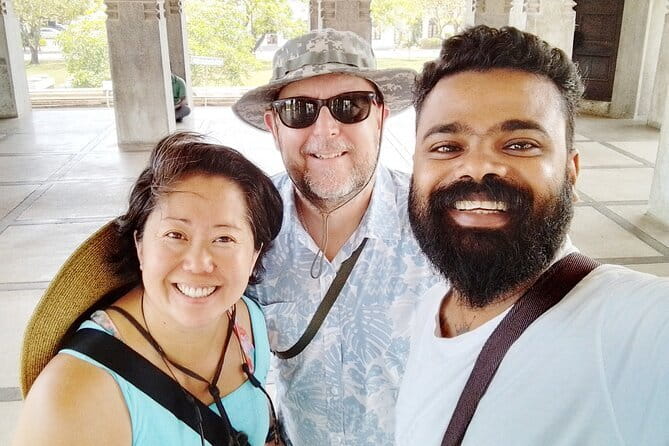
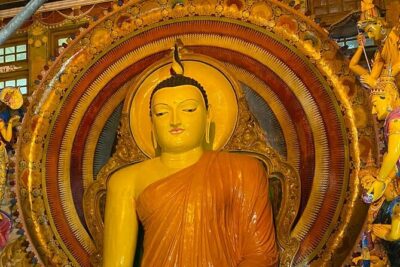
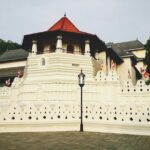
Gangaramaya Temple is one of Colombo’s most important Buddhist sites, and the first thing you’ll notice is the sense of scale—this is not a quiet roadside shrine. The temple is known for a mix of modern architecture and traditional religious space, so it works well as a “here’s how Colombo changes” introduction.
The stop time is about 35 minutes, so you’ll have enough time to walk around and take in the atmosphere without needing a full half-day commitment. Admission is listed as not included, though, so plan for that if you want to go inside all areas rather than just view from outside.
Tip: if you’re unsure about where to stand, follow the flow of locals. At places like this, the best guide is often the crowd moving with purpose—then you’ll feel confident doing the same.
You can also read our reviews of more city tours in Colombo
A Portuguese-Era Hindu Kovil You Reach Through the Fort Area
Next up is Sri Kailawasanathan Swami Devasthanam Kovil, described as a family kovil built during the Portuguese era. It’s tucked into bushy surroundings behind the Fort Railway Station, which is a fun kind of Colombo contrast: modern rail energy just steps away, and then you’re in a quieter pocket of worship.
This stop is short (about 15 minutes), but it’s meaningful because it shows how layered the city is. You get a glimpse of Hindu religious life in a spot that doesn’t feel like a typical tourist temple complex.
Entry here is free (included) in the tour’s listing, which is a nice value touch. And since it’s behind the railway area, it also makes a lot of sense as part of the day’s broader theme: Colombo’s past and present living next to each other.
Jami Ul-Alfar Mosque and Pettah: When Architecture Meets Street Life
Jami Ul-Alfar Mosque—often called Sri Lanka’s Red Mosque—is one of those places where your camera immediately wants to work overtime. The listing notes its tall minarets and that it’s an architectural wonder, and it sits in the Pettah district, a historic part of Colombo.
You’ll spend around 10 minutes here, with free admission. That short time is perfect for first impressions: enough to notice details like the minarets, the setting, and the way people flow in and out.
Then the tour pivots to Pettah itself (about 15 minutes). This is where the experience gets real in a way no brochure can mimic. Pettah is essentially an extended shopping zone, with shops stretching from Olcott Mawatha to Main Street and beyond. You’ll walk in that thick city rhythm—bargains, color, constant movement—and it makes the religion stops feel grounded, not separated.
If you want great photos: aim for angles that include both the mosque presence and the surrounding street energy. The contrast tells the story.
Old Town Hall: Colonial Architecture in the Middle of Shopping Streets
Old Town Hall can be easy to miss if you’re only looking for major landmarks. That’s part of the charm: it’s slightly lost among the shopping streets of Pettah, which means you’re seeing heritage right where daily life happens.
The building is tied to Colombo’s early municipal era and the period of English rule. Your visit is about 15 minutes, and admission is listed as included. So you’re not paying extra just to get inside a heritage building that adds context to everything else you saw.
Practical mindset here: don’t rush the exterior. This stop helps connect the dots between the religious sites and the colonial architecture you’ll see later near the Fort area.
Independence Memorial Hall and Victoria Park: Colombo’s Post-Colonial Mood
Independence Memorial Hall shifts the tone from religious landmarks and trade streets into national identity. The foundation stone was laid by D.S. Senanayake on 4 February 1949, marking the independence milestone. It was designed by Tom Nevill, and that matters because it’s another example of Colombo adapting—taking an inherited colonial-era city plan and building new meaning into it.
You’ll have about 15 minutes, and admission is free in the tour listing. This is also where the tour gives you a quick education in how Colombo narrates itself: not only through monuments, but through the story of independence coming into focus at the civic center.
After that, you’ll pass what was formerly called Victoria Park—now an expanse of vegetation in the heart of the city. It once stretched from the town hall toward Alfred Crescent, and the Ceylon Agricultural Society held shows in the area. That detail is a reminder that Colombo used to gather people in public outdoor spaces in a way you can still feel today around the civic core.
You can also read our reviews of more tours and experiences in Colombo


Galle Face Green, Galbokka Lighthouse, and the Fort’s Old Entry
Galle Face Green is one of Colombo’s key public spaces, and it’s especially useful on an orientation tour because it’s a landmark you can return to later on your own. The listing notes it’s been important to daily life, and that the British are credited with making it a social meeting place—something that still lingers in how people use the space.
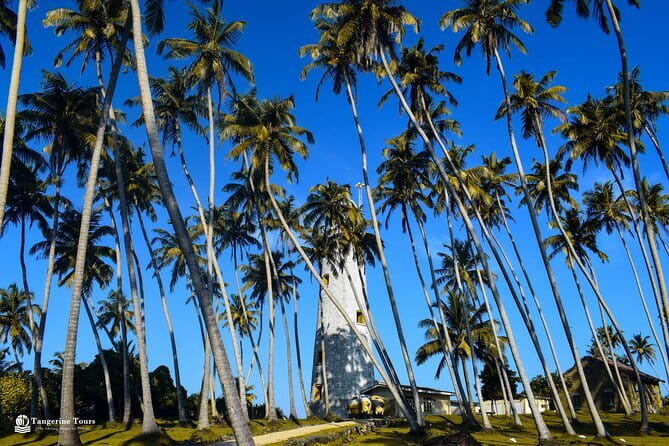
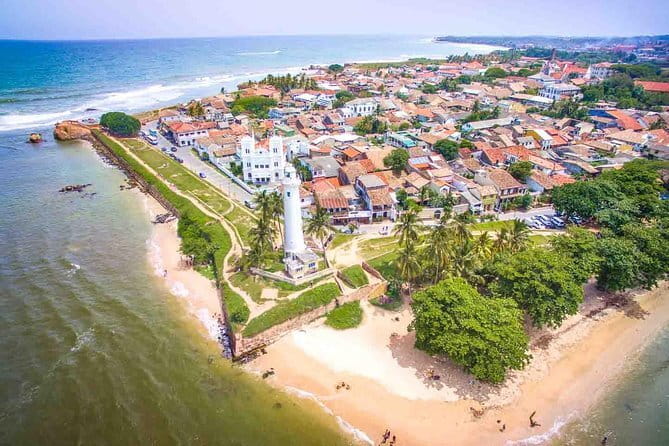
Next comes Colombo Galbokka Lighthouse. The current 29-metre-high lighthouse was built in 1952, replacing an older light that became obscured as the harbor expanded. If you like history with physical evidence, this is satisfying: you’re standing next to the outcome of changing maritime needs.
There’s also an older story attached to the lighthouse history: the earlier tower was constructed as a clock tower in 1856–57, completed 25 February 1857, and designed by Emily Elizabeth Ward, wife of Governor Sir Henry George Ward. Even if you only catch this in passing, it adds a layer to the skyline that most short tours skip.
Then the tour includes Kayman’s Gate Belltower, described as the entrance to the former Colombo Fort at the foot of Wolvendaal Hill in the Pettah district. A historic free-standing bell tower still marks the area, which is exactly the kind of detail that helps you feel like you understand a neighborhood instead of just passing through it.
Lotus Tower Photos and Wolvendaal Church With Still-Active Meaning
Colombo Lotus Tower is a tall, unmistakable landmark, listed at 350 meters. The tour visit is around 20 minutes, and admission is not included. That means you can still enjoy the exterior and views from the area, but if you want to go up inside, you’ll need extra ticket planning.
Then the tour moves to the Christian Reformed Church of Sri Lanka, specifically Wolvendaal Church. It’s described as a Dutch Colonial era building and one of the oldest Protestant churches still in use in Sri Lanka. Admission is listed as included, and the stop is about 15 minutes.
This pairing is smart because it gives you faith without repeating the same style. You’ll see the visual language of Buddhism, Hindu worship, Islamic architecture, and then Dutch Protestant heritage in a single afternoon. If you only visited one kind of religious site in Colombo, you’d miss the city’s character.
Fort Railway Station to Sambodhi Chaithya: Colombo in Motion
Fort Railway Station is more than a backdrop—it’s a major rail hub where inter-city and commuter trains enter each day. It’s served by Sri Lanka Railways, and Fort Station is described as the main rail gateway to the central regions. Your visit is about 15 minutes, with admission listed as included.
Even if you don’t plan to ride the train today, this stop is valuable because it shows Colombo’s heartbeat: people moving between the city and the highlands, day after day.
Then you’ll visit Sambodhi Chaithya, described as an iconic Buddhist stupa built in the shape of a space rocket. The stop is around 15 minutes and listed as free.
That rocket-shape detail is more than a gimmick. It’s a reminder that religious art in Colombo isn’t stuck in the past. The design language is modern, and the result feels instantly memorable—perfect for a tour that needs landmarks to stick.
Port City Colombo: The New Side of the Same City
The final stretch heads toward Port City Colombo. This is presented as a brand-new development built as an International Service Oriented Special Economic Zone. The listing mentions an initial investment of US$1.4 billion and an expected US$20 billion overall investment.
Your stop is about 20 minutes and admission is free. Even if you’re not planning to spend big time here, it’s useful because it balances the afternoon: after seeing temples, colonial civic buildings, and market streets, you also see what Colombo is aiming to become.
It’s also a good reality check for travelers who only expect old-world scenery. Colombo is not trapped in history—it’s building alongside it.
Lunch, Tea, and Why the $34.90 Price Makes Sense
At $34.90 per person for roughly 4 hours, this tour isn’t just sightseeing. It’s built around included costs that add up quickly in Colombo—especially if you’re doing taxis and paying entrances one by one.
Here’s what’s specifically included:
- A lunch or dinner finish, depending on the time slot
- A tea/coffee stop designed to get you enjoying each sip
- Bottled water
- Several admissions are listed as included, including the Hindu kovil at Sri Kailawasanathan Swami Devasthanam Kovil, Pettah, Old Town Hall, Kayman’s Gate Belltower, Wolvendaal Church, and Colombo Fort Railway Station
What’s not included:
- Gangaramaya Temple entry
- Lotus Tower entry
So the value depends on your priorities. If you’re happy to admire Lotus Tower from the outside and only visit Gangaramaya areas that don’t require extra entry, you’ll feel the price is very fair. If you want full access at both, budget for those added tickets and you’ll still likely come out ahead versus paying everything separately plus managing transport.
Also: the tea/coffee stop and meal finish are not just comfort perks. They break up the day so the tour doesn’t feel like you’re sprinting from stop to stop with empty stomach nerves.
Who Should Book This Tour—and Who Might Want Something Else
I’d book this if you’re:
- Visiting Colombo for the first time and want a practical orientation
- Short on time and need a route that hits major neighborhoods quickly
- Interested in how religious architecture and colonial-era civic buildings shape the city
- The kind of traveler who likes markets but also appreciates calm, respectful temple visits
I might skip it if you:
- Want deep museum time and long explanations at a single site
- Hate tight schedules and prefer fewer stops with longer stays
- Are set on paying for every interior ticket (Gangaramaya and Lotus Tower aren’t included)
The best fit is a first-time or second-day Colombo plan, where you’re building knowledge for the rest of your trip.
Should You Book It? My Take
Book it if you want a low-stress way to map Colombo in half a day. This tour gives you a solid mix: temples, mosques, churches, Pettah shopping lanes, colonial civic landmarks, and even a view toward Port City’s future. It also includes food and tea/coffee, which makes the experience feel more like a day with a guide than a rushed hop-on hop-off circuit.
If you’re the type who gets cranky about extra tickets, just plan for Gangaramaya Temple and Colombo Lotus Tower admission ahead of time. Do that, and you’ll likely feel like $34.90 bought you something real: clarity, context, and a route you can build on later.
FAQ
How long is the Colombo City Tour By Tuk Tuk?
It’s approximately 4 hours.
Where does the tour start and end?
The tour starts at Galle Face Hotel on Galle Road in Colombo and ends back at the same meeting point.
Is lunch included?
Yes. The tour includes a lunch or dinner to end your tour, depending on the time slot, plus bottled water.
Does the tour include a tea or coffee stop?
Yes. The tour includes a stop for tea or coffee.
Which admissions are not included?
Gangaramaya Temple entry and Lotus Tower entry are not included.
Is this tour private?
Yes. Only your group will participate.
What’s included besides admissions?
The tour includes bottled water and visits to multiple listed sites with admissions included for several stops.